
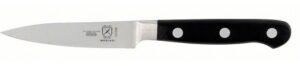

If the chef’s knife is the workhorse of the kitchen, then the paring knife is the precision artist. Small but mighty, this humble tool is one you’ll reach for more times than you realize—whether you’re peeling apples for a cobbler, deveining shrimp, hulling strawberries, or trimming herbs fresh from the garden. It’s the knife that lives in your hand when detail matters most.
My Personal Knife Recommendation
If there’s one small knife I reach for again and again, it’s the Mercer Culinary Renaissance Paring Knife (M23540). It’s nothing flashy, just solid and dependable—the kind of tool that quietly earns its keep. The blade is sharp without being delicate, perfect for peeling apples, trimming berries, or doing the little detail work that bigger knives can’t handle. It feels balanced in the hand, with a comfortable grip that doesn’t slip even when things get a little messy, and it holds an edge far longer than you’d expect at this price point. This is the knife I’d recommend to any home cook who wants professional quality without the fuss—one of those pieces that makes everyday prep smoother and reminds you that good cooking starts with good tools.
Why a Paring Knife Matters
A paring knife is designed for control. Its short blade—typically 3 to 4 inches—allows you to work closely and carefully, making it perfect for tasks where a larger knife would feel clumsy or unsafe.
Common everyday uses include:
Peeling fruits and vegetables
Segmenting citrus
Hulling strawberries
Deveining shrimp
Trimming fat or silverskin
Scoring dough or pastry
Garnish and decorative cuts
Simply put, it’s the knife that turns good prep work into beautiful prep work.
Qualities to Look for in a Great Paring Knife
Not all paring knives are created equal. When choosing one, pay attention to the following features:
1. Blade Material
High-carbon stainless steel is the gold standard. It holds an edge well, resists rust, and sharpens beautifully. A cheaper stainless blade may be fine for light use, but it will dull faster.
2. Blade Shape
There are three common styles:
Spear Point: Classic shape, great all-purpose control
Bird’s Beak (Tourne): Curved blade for peeling and shaping
Sheepsfoot: Straight edge, ideal for slicing small produce
Most home cooks will do best with a traditional spear point.
3. Handle Comfort
Because paring work is done in-hand (not always on a board), the handle should feel like an extension of your grip—comfortable, balanced, and non-slip even when wet.
4. Weight & Balance
You want light—but not flimsy. A well-balanced knife reduces hand fatigue and improves control.
5. Full Tang vs. Stamped
Forged blades with a full tang (metal running through the handle) tend to be more durable, though high-quality stamped knives can also perform beautifully.
Proper Use: Let the Knife Do the Work
Because of its size, a paring knife is best used for detail work in the hand or small board tasks.
Best practices:
Use a gentle pinch grip for control
Cut away from your hand when peeling
Work slowly—precision beats speed
Use a cutting board for harder produce
Avoid using a paring knife for heavy tasks like chopping onions or cutting squash. That’s how tips snap and edges dull.
Care & Maintenance
A good paring knife will last for years—if you treat it right.
Hand Wash Only
Dishwashers are the enemy of sharp edges. Heat, detergent, and rattling contact dull and damage blades. Wash by hand and dry immediately.
Store It Properly
Loose in a drawer = dull and dangerous.
Better options:
Knife block
Magnetic strip
Blade guard
Keep It Sharp
Because paring knives handle delicate work, sharpness matters even more.
Hone regularly
Sharpen on a whetstone or professionally as needed
Don’t wait until it’s “butter knife dull”
A sharp paring knife is safer than a dull one—it requires less force and gives cleaner cuts.
When to Replace It
Even well-loved knives have a lifespan. Consider replacement if:
The blade is heavily chipped
It won’t hold an edge
The handle is cracked or loose
The tip has snapped
That said, many quality paring knives can serve faithfully for a decade or more.
Final Thoughts
In Southern kitchens—and really any kitchen worth its salt—it’s often the smallest tools that make the biggest difference. A reliable paring knife is one of those essentials you’ll reach for daily, from peeling peaches in summer to prepping holiday pies in winter.
Invest in a good one. Keep it sharp. Treat it with care.
And it’ll take care of you for years to come—one perfect slice at a time.